Frontend <-> Backend Communication: Choose Your Weapon Wisely
Not every app needs WebSockets, and not every update deserves polling. This post compares polling, long polling, WebSockets, SSE, and webhooks to help you choose the right real-time pattern based on latency, scale, cost, and UX.

Rakesh Tagadghar
Frontend Dev | Founder | GenAI

Not every app needs WebSockets.
Not every update deserves polling.
And real-time means very different things depending on context.
Here is how I think about the usual suspects.
Short Polling
"Are we there yet?" every few seconds.
Simple, but wastes bandwidth and adds latency.
Long Polling
"Tell me when something changes."
Better than short polling, but still request-heavy at scale.
WebSockets
A permanent open line.
Best for true real-time: chat, trading, multiplayer.
Trade-off: infrastructure and state complexity.
Server-Sent Events (SSE)
One-way stream from server to client.
Great for live feeds, dashboards, notifications.
Trade-off: client cannot push on the same channel.
Webhooks
"Don't call us, we'll call you."
Event-driven, async, scalable.
Trade-off: retries, idempotency, and security handling.
The takeaway:
There is no single best option, only the right one for:
1. Traffic patterns
2. Latency tolerance
3. Infrastructure cost
4. UX expectations
Good systems are built with intentional trade-offs.
What is your default choice for real-time updates, and why?
Share this post
Related Posts

4 Product-Development Architectures for AI Coding Tools (Claude Code, Codex, Cursor)
AI coding tools remove friction from implementation—but they don’t remove the need for process. Here are 4 practical delivery architectures teams use to keep speed and quality.
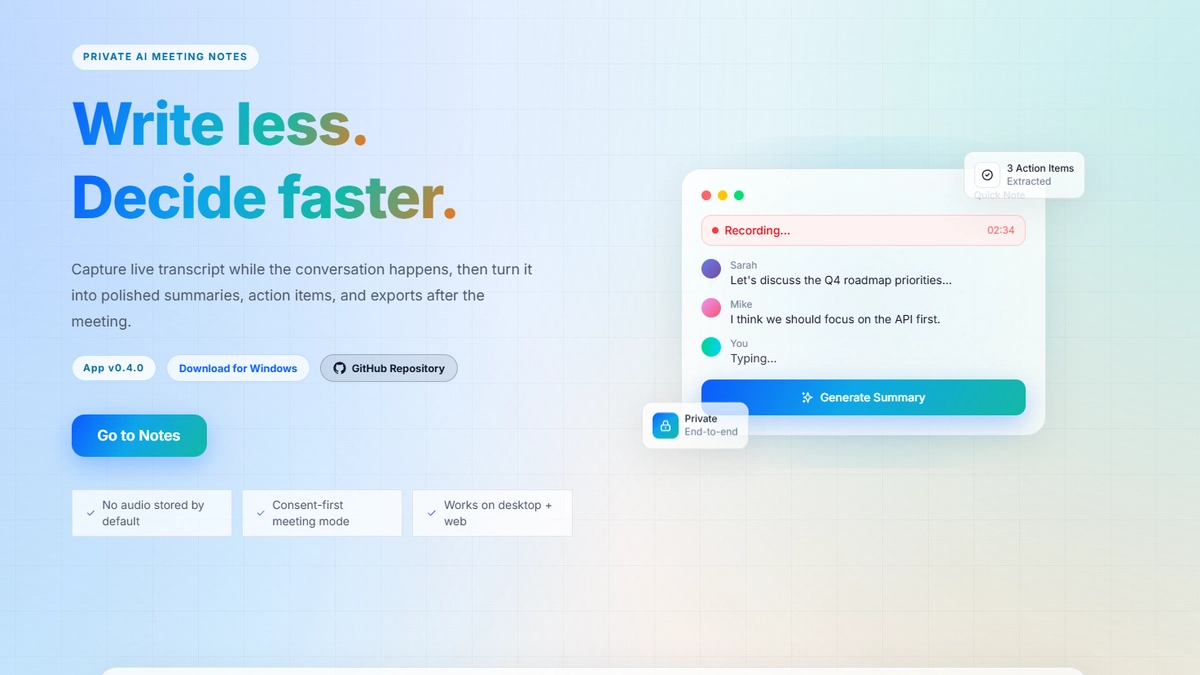
Golden Minutes: Building a Privacy-First AI Meeting Notes System (Web + Desktop)
A breakdown of how Golden Minutes captures meeting audio, generates structured notes, and exports to tools like Notion—while staying reliable and privacy-conscious. Includes architecture diagrams and key engineering tradeoffs.